
How to Choose a Packaging Machine Manufacturer in China: A Practical Guide for Food and Pet Brands
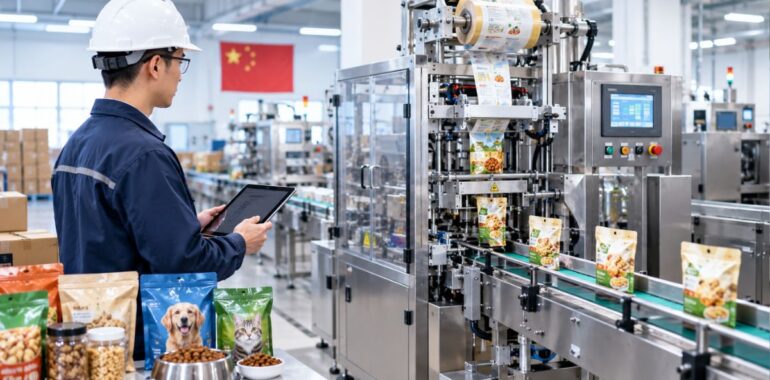
How to Choose a Packaging Machine Manufacturer in China: A Practical Guide for Food and Pet Brands
Think about the last bag of snacks or pet treats you bought. Somewhere, a machine measured the contents, filled the pouch, sealed it, and printed a date on it, probably at a pace no person could match. When that machine does its job, nobody gives it a thought. When it doesn’t, you get leaking seals, uneven fills, wasted film, and shipments that leave late.
For a food or pet brand that is starting to grow, choosing a packaging machine supplier is one of the bigger purchases on the table. China is now a major source of this equipment, which means plenty of choice and plenty of ways to go wrong. This guide covers how pouch machines and turnkey lines differ, what food and pet producers should keep in mind, and how to size up a manufacturer before you commit any money.
Why Buyers Look to China for Packaging Machinery
China has a deep manufacturing base for packaging equipment. You can find everything from basic semi-automatic sealers to complete lines that take a product from feeding all the way to case packing. Buyers are usually drawn by the variety, by pricing that often compares well with Western alternatives, and by suppliers who already know how to work with overseas customers. Many factories will also adjust a machine to suit a particular bag size, product shape, or film.
More choice doesn’t mean more quality, though, and suppliers vary widely. Some are real engineering manufacturers. Others are trading companies reselling equipment made somewhere else. Looking through the product range and project examples of a specialist such as Pallas, China Packaging machine manufacturer can show you how a manufacturer presents its pouch machines, turnkey lines, and food and pet packaging solutions, and what kind of questions a serious supplier expects from buyers. Whoever ends up on your shortlist, the evaluation steps later in this article apply equally.
Understanding Pouch Packaging Machines
Pouches are everywhere for good reason. They’re light, they stand up well on a shelf, and they suit anything from snacks to sauces to kibble. But “pouch machine” actually covers several different technologies, and picking the wrong one is a common and costly error.
Premade pouch machines
These machines start with pouches that already exist. They open each one, fill it, and seal it. That makes them a natural fit for stand-up and zipper pouches, since the pouch can be printed and finished to a high standard before it reaches the machine. Brands that switch pouch sizes often, or that care a lot about how the pack looks on the shelf, tend to lean this way. Specialty snacks, nuts, dried fruit, and premium pet treats are typical examples.
Form-fill-seal machines
A vertical form-fill-seal (VFFS) machine works the other way around. It pulls flat film from a roll, forms it into a tube, seals the bottom, drops in the product, and seals the top, all in one continuous motion. The result is usually a pillow bag or a gusseted bag. Because film on a roll costs less than finished pouches and the process runs fast, VFFS equipment often suits high-volume products such as chips, rice, frozen vegetables, and bulk pet food.
Filling and dosing systems
Whatever pouch machine you choose, the filler matters just as much. Free-flowing dry products like grains or kibble often pair well with multihead weighers. Powders may need auger fillers, and liquids and pastes call for piston or pump systems. A machine that seals beautifully but fills unevenly will still cost you product and customer goodwill, so check that the dosing method matches what you actually sell.
Turnkey Packaging Lines: When One Machine Isn’t Enough
A single machine handles a single step. A turnkey line links several steps into one coordinated system. A typical line might include a feeding or conveying unit, a weighing or filling station, the pouch machine itself, a checkweigher, a metal detector or other inspection device, a coding or printing unit, and downstream equipment for cartoning or case packing.
The biggest benefit is accountability. When one supplier designs and integrates the whole line, you have one company to call if something underperforms. The machines are planned to work together from the start, rather than being fitted together after they arrive, and installation and training tend to be better organized.
Turnkey lines make the most sense when volumes are climbing, when labor is scarce or expensive, or when consistency from batch to batch has become a priority. They do demand more planning up front. You’ll need solid information about your product, your target output, your factory layout, and the utilities available. If a supplier asks detailed questions about all of that, take it as a good sign. A company that quotes a price within minutes of your first message is telling you something too.
Packaging Food Products: What Matters Most
Food packaging carries responsibilities that go well beyond producing a tidy bag.
Hygiene and materials. Parts that touch food are commonly made from stainless steel, and good design makes the machine easy to clean. Ask which surfaces contact the product, how fast the equipment can be taken apart for cleaning, and whether the design avoids spots where residue can collect.
Seal integrity. A weak seal can lead to spoilage, leaks, and returns. Oily snacks, powders that drift into the sealing area, and liquids each challenge a seal in different ways. Ask for sample runs with your own product and your own film.
Shelf life and atmosphere. Some foods keep better with nitrogen flushing or vacuum packing, which can slow spoilage and protect texture. If yours is one of them, confirm that the machine supports it and that your film offers a suitable barrier.
Regulatory requirements. Food safety rules differ from market to market. If you plan to sell in the United States, the European Union, or elsewhere, ask the manufacturer what certifications and documentation they can supply, and check with the relevant authorities or advisors about what your own market requires. A supplier’s general assurances won’t necessarily satisfy local rules.
See More: UPC and EAN Barcodes: A Practical Guide for Sellers and Shoppers
Packaging Pet Food and Treats
Pet products have grown into a serious packaging category, and they come with quirks of their own. Dry kibble is abrasive and dusty, which wears on equipment and can interfere with seals. Treats come in odd shapes and sizes, and some break easily. Wet food and soft chews bring moisture and stickiness into the picture.
A few practical points come up again and again:
- Gentle handling. Fragile treats and freeze-dried products may need slower, more careful conveying and filling to avoid breakage.
- Dust control. Kibble and powdered supplements can contaminate the sealing area, so dust extraction or well-designed filling points help protect seal quality.
- Range of pack sizes. Pet brands often sell small trial pouches next to large family-size bags. Check whether one machine can cover that range or whether you’ll need more than one format.
- Resealability and barrier. Zipper and stand-up pouches are popular because owners open and close the bag many times. Make sure the machine handles zippers properly and that the film keeps food fresh and holds in aroma.
- Weight accuracy. Pet food is sold by weight, and overfilling adds up quickly across thousands of bags. A well-calibrated weighing system tends to pay for itself.
How to Evaluate a Manufacturer
Once you know which type of machine or line you need, the next job is telling strong suppliers from weak ones. These checks go a long way.
Confirm they actually build the equipment. Ask whether the company manufactures in its own facility, and whether you can see it, either in person or through a live video tour. Request photos or videos of machines running, and ask for references from customers in your industry.
Request test runs. Send your product and your packaging film, and ask for a video of the machine handling them. It will tell you more than any brochure. If a sample run isn’t possible, ask why.
Read the specifications closely. Look at stated speeds, bag size ranges, power requirements, air consumption, and the control system. Be cautious about speed claims that come without context, since real output depends on the product, the film, the bag size, and the filling method.
Ask about components. Find out who supplies the PLC, touchscreen, motors, sensors, and pneumatic parts. Widely used brands are easier to repair and replace locally.
Check after-sales support. How are installation, commissioning, and training handled? What does the warranty cover, how quickly do spare parts ship, and is remote troubleshooting available? Many problems with imported equipment come from weak support rather than weak machines.
Get the commercial terms straight. Get quotes in writing and confirm what’s included: spare parts kits, export packing, shipping terms, and the payment schedule. A very low price that leaves out key items often ends up costing more.
Questions to Ask Before You Order
Before signing, it helps to run the same short list of questions past every supplier you’re considering:
- What exactly does the price include, and what would cost extra?
- Can you run my product and film on this machine and send me the video?
- What output can I realistically expect with my bag size and product, as opposed to the maximum rating?
- Which spare parts should I keep on hand, and how fast can replacements ship?
- How will the machine be installed and my staff trained?
- How long is the warranty, and what does it cover?
- Can I speak with a customer who bought a similar machine?
Clear, specific answers are encouraging. Vague answers, or pressure to pay quickly, deserve a second look.
Common Mistakes Buyers Make
Certain errors show up repeatedly. Some buyers choose on price alone and discover later that support and spare parts are lacking. Others buy a machine that fits the brochure but not their actual product. Film is often underestimated: its quality, thickness, and sealing properties strongly affect machine performance, and a mismatch causes constant trouble. People also forget about the space and utilities the equipment needs, such as compressed air, power, and floor layout. And some skip operator training, then blame the machine for problems that came from setup.
Thinking through these points before you buy can save a surprising amount of money and frustration.
Final Thoughts
The right packaging machine isn’t necessarily the cheapest or the fastest on paper. It’s the one that suits your product, runs your film reliably, meets your hygiene and regulatory needs, and comes from a supplier who stays responsive after the equipment arrives.
Start by defining your product and production goals clearly. Decide whether a single pouch machine will do the job or whether a turnkey line fits your growth plans better. Then compare manufacturers using real test runs, clear specifications, and honest conversations about support. That time spent up front gives food and pet brands a much better chance of ending up with equipment that quietly does its job for years.